

This is the fourth week of our “Names of God” series, where we intend to develop a deeper understanding of God by understanding the various names that He holds. There are several names and titles presented to us in scripture, with each teaching us something unique about God.
Video:
Audio only
We have a lot of symbols in our culture. We see it in signs, flags, social media memes. Many such things can be known immediately for what they represent.
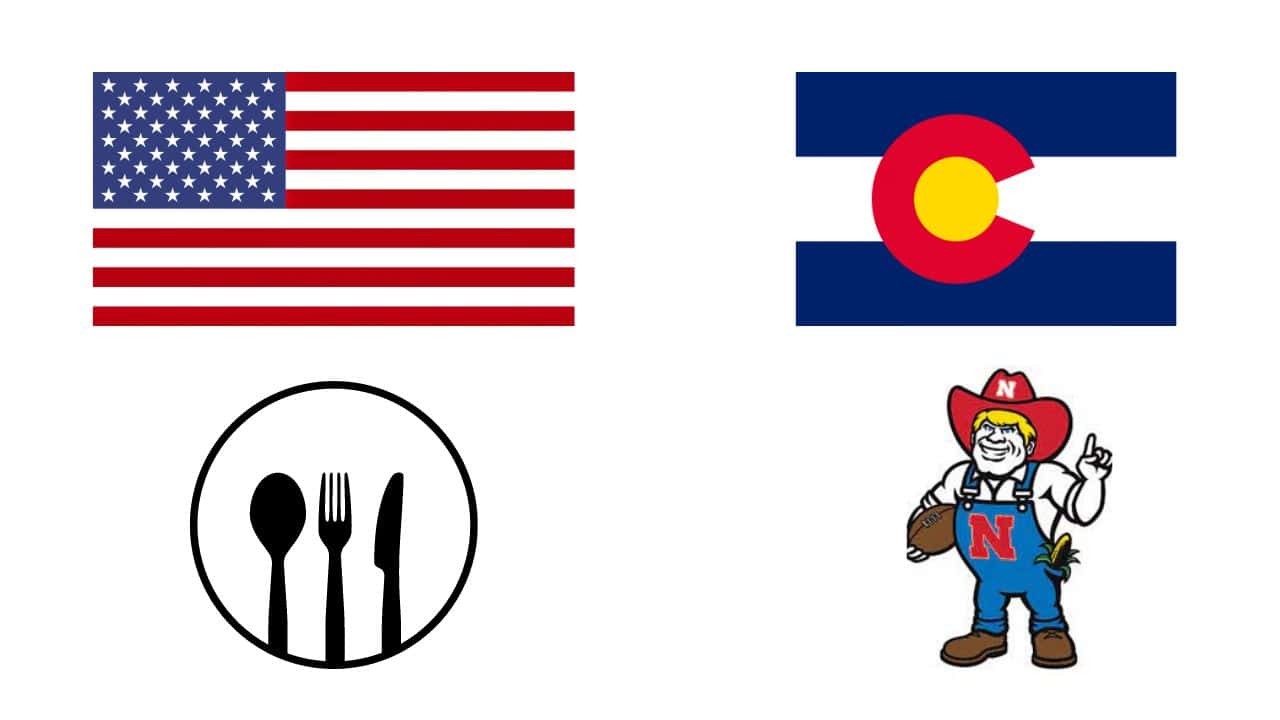
We can look at each of these and know immediately what each symbol represents. (Editor’s note: the bottom right symbol may or may not have been surreptitiously added by our online person).
That’s what flags or our banners are meant to do. They’re meant to represent something that they’re meant to communicate something and symbolize something. Whether it’s positive, negative, or something in between, each gives a message. It communicates something deeper than just some arrangement of colors or materials.
Today, we’ll be looking at how Moses gives God a wonderful name that’s meant to communicate something significant, deep, and unique about God. He gives God the name Jehovah-Nissi, which means “The Lord is our banner.”
The Israelites are attacked by the Amalekites.
We talked a little about Moses previously when we talked about El-Kanna, which means Jealous God. Before we dive into our passage, Exodus 17:8-16, let’s look at some background.
Moses is leading the people of Israel out of slavery in Egypt. For generations, they had been enslaved as brickmakers. They’re wandering in the desert, en route to the land God has promised them. It’s here that they’re attacked by the Amalekites.
The Amalekites came and attacked the Israelites at Rephidim. Moses said to Joshua, choose some of our men and go out to fight the Amalekites. Tomorrow I will stand up on the top of the hill with the staff of God in my hands.
Exodus 17:8-9
This might not be a random attack. On the one hand, the Amalekites may have been concerned about having their land and resources taken. But if we dive deeper, we see that the Israelites and Amalekites have had a beef for generations and there may still be tension between them.
Another thing is that the Israelites were not soldiers. They were brickmakers. They are not ready to scrap, they’re not ready to fight. If you need a brick, you give ’em a call. But if you’re trying to win a battle, these are not the people that you turn to.
The Israelites are not in a good position here. Compared to the Amalekites, they’re likely under-powered and overwhelmed.
An unusual military strategy
In contrast, Moses is not a skilled tactician, but he has a plan. You can imagine his conversation with Joshua, who will eventually be his successor: “I want you to take our brickmaking and farming squad and go up and fight them.”
“And what will you do, Moses?”
“I’ll go find a hill and stand on it. I have my staff. I’ll stand on a hill with my staff.”
While I am not a skilled tactician myself, I don’t think that’s a great plan. Being trained in ministry and counselling, I’m more likely to ask how you feel about going to war than leading a battle. Even still, I don’t think this is a great plan.
But one thing that Moses says is, I’ll go on the hill with the staff of God in my hands. This isn’t just any old staff, but it’s the staff of God. God gave it to Moses to perform miracles so that he would know that God is with him. It’s the staff that Moses threw to the ground and it became a snake. It’s the staff he used when parting the Red Sea.
While God used the staff to do incredible things, it wasn’t the staff itself that was powerful. Instead, he used an ordinary wooden stick to do the miraculous. It symbolized and communicated something greater than a simple stick of wood.
So Joshua felt the Amalekites as Moses had ordered, and Moses, Aaron, and Hur went to the top of the hill. As long as Moses held up his hands, the Israelites were winning. But when he lowered his hands, the Amalekites were winning.
Exodus 17:10-11
This is one of those Biblical stories you read and wonder, what’s really going on here? Moses has Joshua down in the pits fighting a battle, while Moses is on a hill with his stick. But as long as his hands are up while holding the staff, Israel is winning. When he tires or gets a cramp in his 80-something-year-old bicep and lowers his arms, the Amalekites prevail.
The significance of a banner.
The banner would be made of wood or metal and was usually hoisted up high so that everyone could see who you represent. It was meant to be a symbol. It was also a rallying point or a place to regroup. People could receive treatment or gather to strategize. The banner had several functions.
Ultimately, the banner was a thing of inspiration. When the battle is hard, and you’re getting tired or roughed up, you could look back at that banner or flag. You could remember who you’re fighting for, and be reminded why you’re doing what you’re doing.
The banner can give an army the strength to keep going.
When the Israelites were getting weary in the heat of battle, they could look back at Moses who was strategically placed. Moses isn’t holding a metal banner or flag. He’s holding the staff of God. I’m sure the Israelites knew the history of that staff.
The staff of God reminded the Israelites that HE was their strength, He was the one they represented. God was their source. This was the God who used ordinary things to do extraordinary things.
The staff reminded Israel that the battle belongs to the Lord. It told them that they represented God Himself.
I can’t imagine being in the thick of battle, but I can imagine how inspiring it would be to look back at that staff and be reminded of the God who brought you through all of this.
The banner, victory, and what it means for us
There’s a ton of symbolism that’s going on here. When God is raised high for all to see, when He is the one that we point to, when we say this is the One True God that I represent, something happens. But when we begin to lower him, take him off of his rightful place, something else happens.
When God is raised high, there is victory. When we bring Him down, there’s defeat.
The Israelites were just out of slavery. They had no battle experience. They were attacked by a familiar foe while wandering in the desert. As they fight this battle, they’re only victorious when the Lord their God is elevated. They lose when He’s not.
Talk about a point of understanding who your strength is, about being reminded of your source of victory! When He’s the one we look towards, when His staff is raised high, we have victory.
When it is lower, we begin to lose.
When Moses’ hands grew tired, they took a stone and put it under him, and he sat on it. Aaron and Hur held up his hands – one on one side and one on the other – so his hands remained steady until sunset. So Joshua overcame the Amalekite army with the sword.
Exodus 17:12-14
Moses is probably hot, sweaty, and tired. At 80-some years, he’s getting weary as the battle drags on. But he has two people come alongside him and help him hold the Lord up high. Aaron on one side and Hur on the other hold up his hands and keep him steady. They, too, were probably tired, but they held his hands up until the battle was won.
The name Jehovah-Nissi is given.
Then the Lord said to Moses, write this down on a scroll as something to be remembered and make sure Joshua hears it, because I will completely blot out the name of Amalek under heaven. Moses built an altar and called it Jehovah-Nissi. He said, because hands were lifted against the throne of the Lord, the Lord will be at war against the Amalekites from generation to generation..
Exodus 17:15-16
The Lord says, make sure you write this down when this is all said and done. Also, make sure Joshua knows and remembers what happened.
Moses is tiered and weary, yet he musters the strength to build this altar. It’s a practice we see multiple times in the Old Testament. Moses dedicates this altar to the Lord and gives a new name for God: Jehovah-Nissi. It means “the Lord is my banner.”
What a wonderful name that is.
The significance of the name Jehovah-Nissi
I love this story. There’s so much to appreciate about it.
One thing that stands out is this imagery of Israel pointing to the Lord being their banner. That’s unique. While other nations have banners of gods or animals or images of the kingdom, Israel has none of that.
Instead they have a stick. They say, “this stick is going to represent the God I have hope in, y’all. Keep your metal, y’all keep your fancy wooden boards. I’m rocking with this stick. This stick represents the God who has delivered us from multiple encounters.”
Other nations had a wooden banner or a metal banner, but Israel had God. He was their refuge, he was their inspiration, He was where they went to regroup, He is where they went when they needed help. And he was the reason why they were able to remember why they were doing what they were doing in the first place.
It was because of the power of God.
They found success and were able to ascribe to him this name Jehovah Nissi, the Lord is my banner.
The name Jehovah-Nissi defines a relationship with God
This name is a testimony that carries a powerful message. As I review this story, the context in which this name is given, and the meaning behind the name, it provokes this thought within me: I wonder if this is a name we can honestly give God today.
Does this name describe our relationship with God today? This name is awesome and rich with symbolism and truth, but it’s also a name that kind of comes with a little bit of a heart check. It provokes us to ask this question: Does this name reflect my relationship with God today?
Jehovah-Nissi: the Lord is my banner.
The thing about this name is that Moses doesn’t just describe something about God. It says something about his relationship with God. It means that Moses is at a point in his relationship with God, where he’s saying, “the Lord is my banner. I’m not raising anything else up. The Lord is the one that I point to.”
The name means he’s at a point where he says, “I’m not fighting for my own glory. I’m not interested in my own glory, in receiving praise or being perceived a certain way. Instead, I want to raise up the Lord in everything that I do.”
Moses could say, “I’m not the rallying point. I’m not the source of strength, the healer, or the star of the show. I am pointing to the God who is. I’ll not raise up any other flag. I’m not here for any other reason. I worship Jehovah-Nissi, for he is my banner.
What does this name say about our relationship with God?
This name is not just a name. It’s our testimony, our relationship with God.
As we understand the beauty and depth of this name, we have to ask: Does this name describe our relationship with God today?
That’s the heart check. It requires that we be honest enough with the Lord to be willing to ask: Is the Lord truly my banner? Am I raising something or someone else up in His place? Is the reason for what I do to truly glorify and serve Him?
Or do I have something else attached to it that I need to look at? Have I made myself the rallying point? Am I my source of strength? Or do I tend to turn to other people, things or habits in times of stress when I’m in the heat of battle?
Is the Lord the one raised up for all to see on that hill, or is something else in His place? Am I raising up the Lord or is it my own strength, talents, abilities, or ego? Am I raising up my finances or my own interests? Where do I turn for strength and motivation?
Is the Lord really my banner? Is he the one I represent? Am I truly going forward because of Him? These are tough questions to ask. The answers can be difficult to receive.
What happens when the Lord is our Banner
It’s harder still to reorganize these things and submit them to God.
However, I promise that it’s worth it. I promise there can be peace, a release, and rest when we truly allow Jehovah to be our banner.
The Lord being our banner lets us rely on His strength
Because when the Lord is our banner, we don’t have to on our strength to accomplish the things that we’re going out to do. Nothing about the victory of the brick-making farming Israelites over the Amalekites was about their strength. God’s strength was sufficient for them.
When the Lord is our banner, the battle belongs to him. No matter what we’re fighting, you can lay that down because then it’s not about you.
It’s not about your strength, skills or intelligence. When the Lord is your banner and the reason for what you do, you can say, “God, I’m just going worry about being obedient. I’ll let you fight this for me. I’ll let you be the one to bring the victory.”
The Lord being our banner inspires our action
When the Lord is our banner, we don’t have to worry about our place in different situations. When he’s the reason why we’re taking these marching orders, we can say, “God, you direct me. If you want me to be in the middle of something, or to step back into something, I’m not involving myself in anything you don’t want me to be involved in because you are running the show. I’m just here to follow you.”
How often have we found ourselves in the middle of a sticky situation we had no business being in? When the Lord is our banner, we can say, “God, you tell me where to go and I’ll go. I won’t worry about the outcome or the impact. I’ll just focus on being obedient because the battle belongs to you.”
We can trust Him to be our director and our commander-in-chief. When he says, “I want you to be a part of this and step into this,” we can do so. We can back off when he tells us to because it’s Him we represent.
When he is our banner, we need not worry about the outcome. We just make sure we follow his lead. Because if He really is God, if He is Adonai (the first name in our series) and our sovereign Lord, we just have to focus on sticking with him.
Let him be the one that fights your battles for you. Let Him go before you. You’re don’t represent yourself, you represent Him. Let Him be the one that brings the victory.
The Lord being our banner gives us peace.
When he is our banner, we have a safe place to rest, rally, and regroup. When he is our banner, He’s the safe space that we can go to. He is the place where we can find rest when He’s our banner.
We don’t have to worry whether or not another person is available. It doesn’t matter what the stock market will do, or if anything else is reliable. That’s because when He is our banner, we know He will be there.
I know he will be consistent. I don’t have to turn to anything else, but I can rest with Jehovah because he’s my banner. Not anything else or anyone else.
When we allow him to be our banner, our refuge, our strength, our cause, and our place of rest, when we allow him to direct our steps, when we give Him authority over our desires and the passions of our heart, it is the wisest decision we can make.
We don’t have to be in control. Instead, we can rest and let him care for those things and much more. We can let Him be our banner.
Jehovah-Nissi: what a wonderful name that is.
A prayer to the Lord who is our banner
My prayer is that we allow him to be Jehovah-Nissi. We allow him to be our banner. If we have other flags or other things that we wave in the air or that are our cause and motivation, I pray we’re willing to lay them down.
I pray we can allow him to be the one who directs our steps, the one we represent. That we’re willing to ask: Does this name Jehovah-Nissi reflect my relationship with God? That if it does, we’d keep it that way and be blessed by that. If not, that we allow that name to reflect our relationship with him, that we live our life in a way that blesses Him with this name.
God, you are my Jehovah-Nissi. Nothing else. No one else. It is you. God, you are my banner.
I want to wrap up with this prayer to Jehovah-Nissi. Keep in mind, this isn’t to another God, it’s the same God, but just a prayer specific to this name of His.
Jehovah-Nissi, you are my banner. Thank you for walking with me through all my battles. Help me to remember that you want me to turn to you and to seek your help and wisdom in every situation. Be my cause, my refuge, my strength, my source, and my rest. Thank you God. Be my banner, oh Lord, for you are Jehovah-Nissi. Amen.
Based on the prayer to Yahweh-Nissi by Karen O’Reilly in Scriptural Grace