

There was a time growing up where my dad tried to teach me how to play dominoes. Maybe it was too complicated, because I never really caught on to the game.
However, I did enjoy the other way of playing with dominoes: Stacking them up one next to the other, creating a line, and knocking the whole line down. I fell in love with that method. I loved all the patterns you could do and how people would create elaborate designs.
The dominoes were fun, but there was something destructive about them. After tipping them over, everything is altered. It’s a principle they call the domino effect. A specific trigger, such as an action or thought, leads to a chain reaction that impacts everything down the line.
Audio only
The domino effect and the wrath of God
Keep this imagery in mind as we talk about the wrath of God. In our passage, we see his wrath as part of tipping the dominoes. Our choice of sin is the force or trigger that tips that first domino. As sin entered the world, it changed the world that God created. Let’s examine the consequence of that tipping of the dominoes.
Our passage in Romans 1:18-32 is a hard message. It’s also a message of grace, because we can look at how we can also return to God.
The wrath of God is being revealed from heaven against all the godlessness and wickedness of people who suppress the truth by their wickedness.
Romans 1:18
Right out of the gate, Paul introduces the concept of the wrath of God. What does that mean?
When we think of God’s wrath, we often think of God unleashing natural disasters like tornadoes, hurricanes or fires on his people. We may think of God having a fit of uncontrolled rage.
Diving into this passage, we’ll see that his wrath isn’t like what we might experience with others, or what we see in our own wrath. One commentary puts it this way:
The wrath of God is not, of course, an emotional rage, but a steadfast and absolute opposition to all that is evil.
New Bible Commentary
Another calls it an expression of God’s personal righteousness and opposition to human sinfulness. Paul tells us here that GJod’s wrath is being revealed. In other words, it’s no longer being hidden or covered up. God is revealing his wrath against all godlessness and against the wickedness of people.
The dominoes of rejection, godlessness, and wickedness

One thing we take away from Romans 1:18 is that God’s wrath is revealed against godlessness. Ultimately, we’re talking about rejection of God. Instead of being full of God, we’ve emptied ourselves from him.
The wrath of God is also against wickedness. Wickedness is the result of godlessness. When we reject God, it comes out in our actions. It comes out in our words, deeds, and thoughts. That rejection shows up in the way we live.
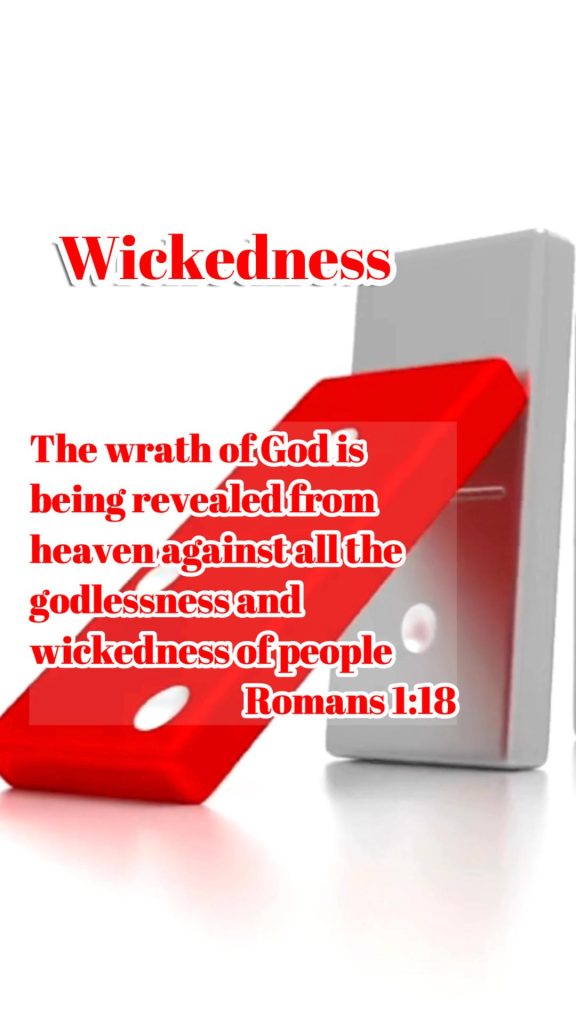
The first domino here that triggers everything is rejection of God. That leads to godlessness and wickedness.
The next domino: suppressing the truth.
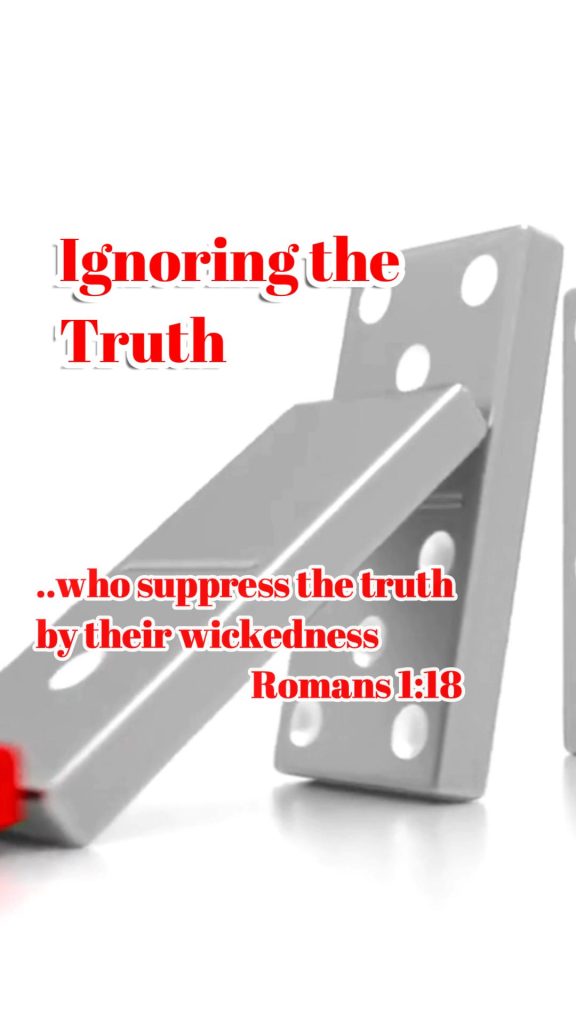
Paul continues, saying that out of wickedness we suppress the truth. Truth exists, but we choose to suppress or ignore it. We don’t acknowledge the truth, instead doing what we desire in spite of truth.
A good example of this is the story of the liberation of a concentration camp in Ohrdruf, Germany towards the end of World War II. The conditions of the camp were so bad that General Patton threw up after seeing them. He brought in the mayor and mayor’s wife, who insisted they didn’t know what was happening.
That night, the mayor and his wife hung themselves. They left a note that said, “we didn’t know, but we knew.”
It was obvious that something was going on. They may not have dug into what it was, because ultimately they didn’t want to know.
Paul gives us another example:
Since what may be known about God is plain to them because God has made it plain to them. For since the creation of the world, God’s invisible qualities — his eternal power and divine nature — have been clearly seen being understood from what has been made so that people are without excuse.
Romans 1:19-20
Paul strips us here of our excuses, saying that God made it very plain who he was. His creation gives all the evidence we need. We live in arguably the most beautiful state in the nation where we see that natural revelation all around us.
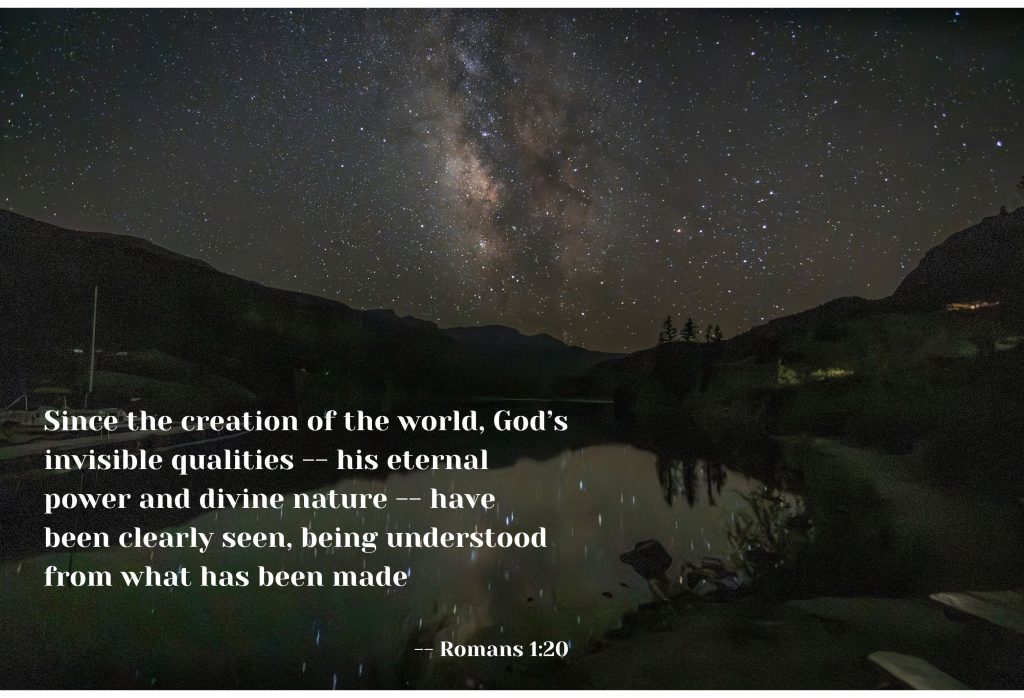
It’s so striking that it’s absurd to say it all just came together. The life and beauty and intricacy of the world around us is evidence of our creator.
We can’t say we didn’t know. If we don’t see the evidence of God, it’s ultimately because we don’t want to.
The next domino: futile thinking.

For although they knew God, they neither glorified him as God nor gave thanks to him. But their thinking became futile and their hearts were darkened. Although they claim to be wise, they became fools and exchanged the glory of the immortal God for images made to look like immortal being and birds and animals and reptiles.
Romans 1:21-23
We often focus on Paul saying “they.” He’s talking about sinful humanity and those outside of Christ. The reality is that we’re sinful beings. Even as believers we reject God time to time. We can use the word “we” just as accurately.
Another domino tips over. The natural consequence of rejecting God is that we start to serve our own desires. We worship things, desires, our selves, and power.
Paul calls this consequence “futile thinking.” Ultimately it’s that sin makes you dumb. It changes how we think, and we justify things we shouldn’t justify. In verse 22, Paul says “they claim to be wise but are fools.”
Have you ever witnessed someone who is so wrong in their argument but so confident in their reasoning? It’s this futile thinking, believing you know it all when you really don’t know anything, that is one more domino that falls after rejecting God. God becomes like a parent speaking to us as children, saying “you think you know everything, but you don’t.”
The final domino: the wrath of God.
In verse 24, we start to see what the wrath of God means. This is what it looks like:
Therefore, God gave them over in the sinful desires of their hearts to secual impurity for the degrading of their bodies with one another. They exchanged truth for a lie, and worshiped and served created things rather than the Creator, who is forever praised. Amen.
Romans 1:24-25
Up to this point, all of the dominoes were about what “they” did. There was a natural progression of what people do when they reject God. But now we see God’s reaction.
Our text started with how God’s wrath was being revealed. And here we see how it’s being revealed. But his wrath isn’t revealed in swirling tornadoes or violent earthquakes. God’s wrath isn’t shown in an out of control rage.
The wrath of God here is revealed as God giving humanity over to what they desire.
It’s permission.
Have you ever met someone who was so stubborn about what they want to do that there’s no changing their mind? It doesn’t matter how bad the consequences will be, they’re dead set on their plan. If you stand in their way, they’ll fight you.
It gets to where you have to step back and say “fine, have it your way. Do what you’re going to do.” You know it won’t end well, but you have to let them discover the consequences for themselves.
That’s what God’s doing here. We don’t want God and fight against him. He gets to the point where he says, fine! Do what you will do.
That’s scary when you think about it. God steps out of the way, lets us do what we want, and lets us face the consequences.
Spiritual disorder as part of the wrath of God
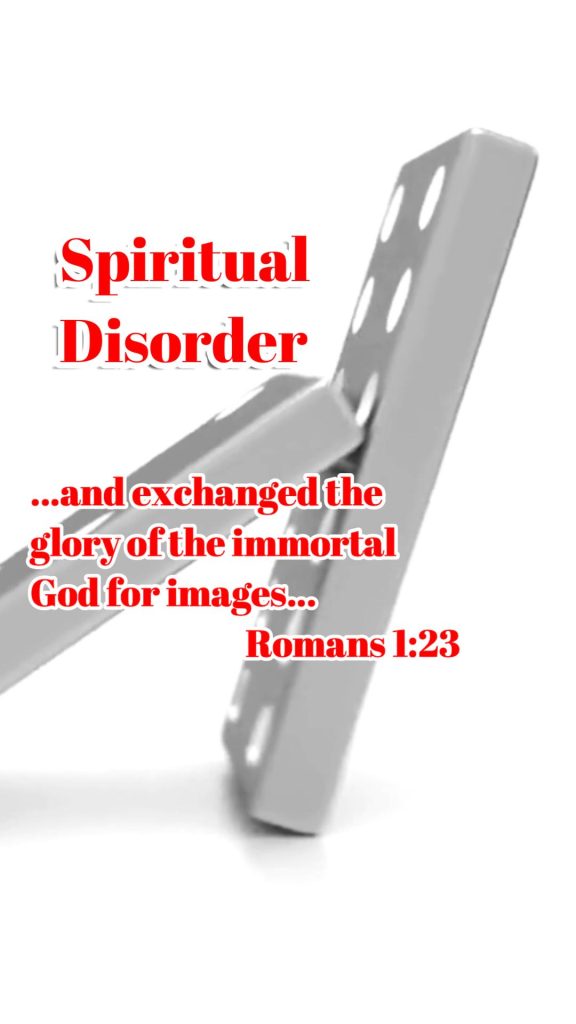
When God lets us have our way, all forms of disorder set in. The first type of disorder is a spiritual disorder. We become disordered. Our morals are disordered. Our thinking becomes disordered.
We become so disordered that we stop worshiping God. We worship rocks, we worship the sun, the moon, and the stars. It leads to worshiping people, money, power, and our sense of security. Our rejection of God runs deep to the point where we don’t worship the creator but instead worship created things.
We reject God, leading to godlessness, which leads to wickedness. From there, we suppress the truth of God, which leads to futile thinking. God lets us have our way, and that leads to a spiritual disorder. This is where the wrath of God meets the natural consequences of our rejection of him.
Sexual disorder as part of the wrath of God.

Because of this, God gave them over to shameful lusts. Even their women exchanged natural sexual relations for unnatural ones. In the same way the men also abandoned natural relations with women and were inflamed with lust for one another. Men committed shameful acts with other men, and received in themselves the due penalty for their error.
Romans 1:26-27
This is a sensitive passage, but it’s important that we not shy away from uncomfortable things. When God chooses to talk about it, we should pay attention.
This is one of the most lengthy and clear descriptions of what the Bible says about homosexuality. There’s a clear and natural order for intimacy and sexual relations between people. It takes place between a man and a woman in the covenant in marriage. Such intimacy outside of the marital covenant, including homosexuality, is another rejection of the order of God.
This isn’t about whether the feelings are unnatural or whether people are born with inclinations. In fact, the spiritual disorder that comes from rejecting God leads us to feel many things as “natural” that are opposite of the will of God. Paul will address other things later in this passage that often seem to come naturally but are still sin.
But ultimately, God’s wrath includes handing people over to their own desires. When we reject God, we start seeking other things to replace him. Sexual relationships fall into that category. We fall outside the order for sex that God created. We elevate our desires over his design and decide to call the shots ourselves instead of letting God do so.
Social disorder as part of the wrath of God

The other thing that happens when God steps back and allows us to do as we please is social disorder.
Furthermore, just as they did not think it worthwhile to retain the knowledge of God, so God gave them over to a depraved mind so that they do what ought not to be done. They become filled with every kind of wickedness, evil, greed, and depravity. They’re full of envy, murder, strife, deceit and malice. They’re gossips, slanderers, God haters, insolent, arrogant and boastful. They invent ways of doing evil. They disobey their parents. They have no understanding, no fidelity, no love, no mercy.
Romans 1:28-31
Paul didn’t stop at sex, did he? Even if we’re not caught up in sexual sin, there’s a whole laundry list of other things. This is not an exhaustive list. It’s not complete. Paul points out that many things happen when we turn from God.
If we look closely, we may see ourselves in some of these. Maybe we don’t worship idols or engage in sexual sin, but what about greed and wanting more than we have? What about envy? We may say we’ve never murdered anyone, but the Bible equates hate to murder.
There’s very likely something in this list that impacts you. There’s something here for all of us. Even as believers, we still reject God from time to time, and we still struggle with things that happen as a result.
God’s wrath as a form of grace
Although they know God’s righteous decree that those who do such things deserve death, they not only continue to do these very things but also approve of those who practice them.
Romans 1:32
Every choice we make in life requires us to combat the influence of sin. However, there’s a lesson in the falling of these dominoes. We learn something from how rejecting God leads to Godlessness, which leads to wickedness, which leads to suppressing truth, which leads to futile thinking, which leads to God’s wrath revealed in him letting us face the consequences of our sin.
Ultimately, we learn of our desperate need for God’s love, mercy, forgiveness and grace. The disorder in our lives, whether social, sexual, or spiritual, opens our eyes to the fact that we need a savior to come and fix everything. It shows us that we cannot fix it ourselves.
Here’s the irony about the wrath of God. I believe it’s a kind of grace. He lets us have our way, and we ultimately discover how sick with sin we are. Sometimes we have to hit rock bottom to see our desperate need for him. The wrath of God, or his letting us have our way, shows us how lost we are without him.
And here’s the beauty of the Gospel: Jesus doesn’t sit back and say “I told you so,” or “you should have done what I told you.” Instead he says, “Watch what happens: See the consequences so that you come back.”
“I want you to come back.”
That’s the invitation of the Gospel. God invites us to give him back that number one spot in our lives. He invites us to live as he intended, in submission to and in relationship with him. Even in a world riddled with the consequences of our sin, he invites us to freedom. We have the opportunity to follow him and free ourselves of the spiritual, sexual and social disorders.
The wrath of God reveals our need for the gospel. The death, burial and resurrection of Jesus is the gospel that lets us go right back where we belong.