
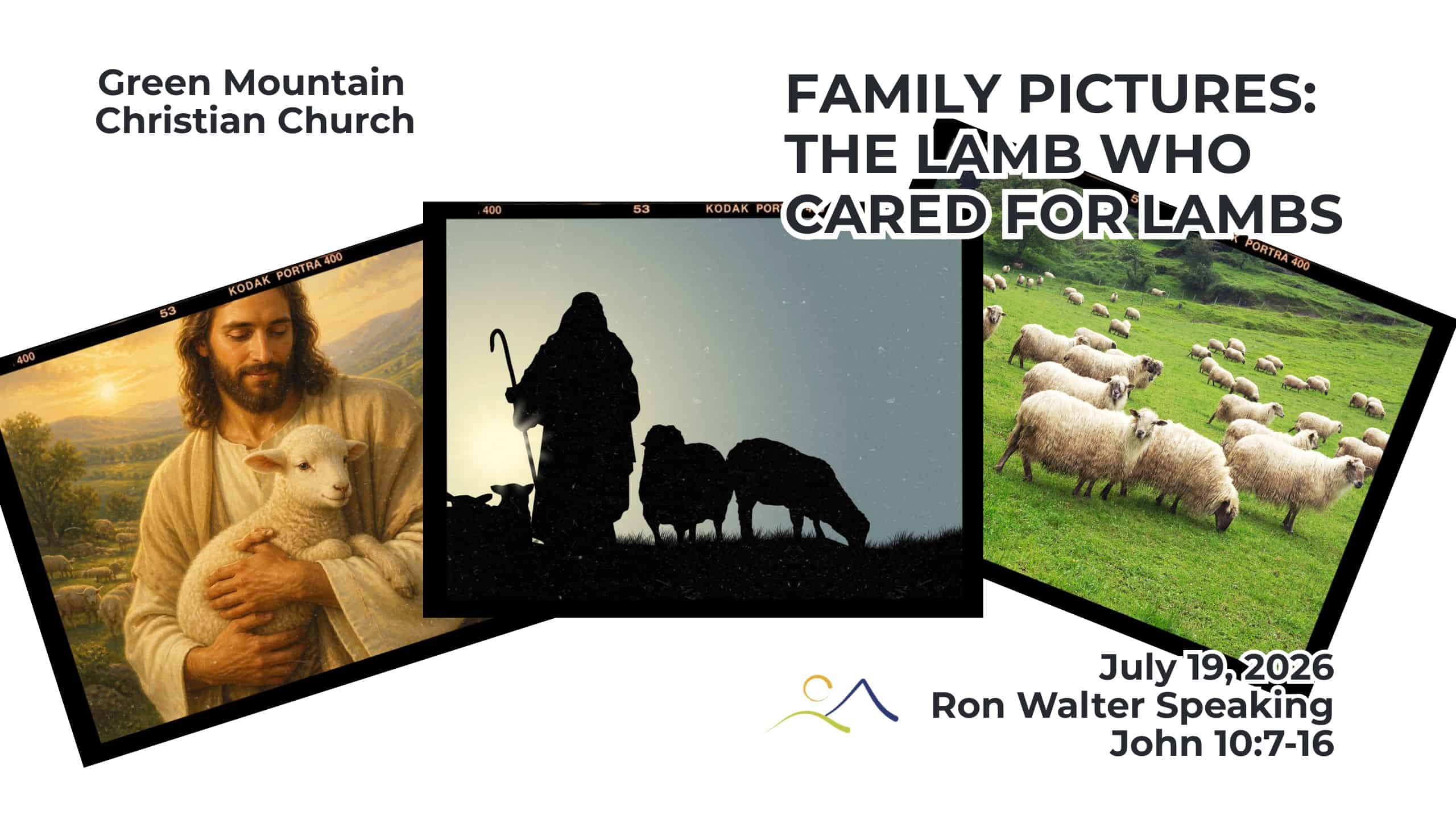
I read of a man who grew up in a mission field of his experience watching a shepherd lead his sheep. It was in a mid size town with streets filled with cars, scooters, motorcycles and pedestrians. In the middle of all that, each morning this shepherd would lead his sheep to a large field where they could graze.
In the midst of the chaos he would walk down the same road and all the sheep would weave around the traffic, faithfully following their shepherd. They weren’t phased by the noise and the din, they just faithfully followed their shepherd to the pasture.
Video:
Audio only
Life gets that way, doesn’t it? There can be chaos all around us. We might have health concerns or family issues or a career that’s upside down. Everything seems like chaos and life can seem out of control. And yet when we can keep our eyes on and follow our shepherd, nothing else seems to matter.
This is why it’s such a valuable picture for us to see this snapshot of the church as the flock of God. God gives us another word picture of who we are: a picture of a loving relationship with and reliance on our shepherd.
It’s not a negative snapshot
Be shepherds of God’s flock that is under your care, watching over them—not because you must, but because you are willing, as God wants you to be; not pursuing dishonest gain, but eager to serve; not lording it over those entrusted to you, but being examples to the flock. And when the Chief Shepherd appears, you will receive the crown of glory that will never fade away.
1 Peter 5:2-4 (NIV)
We see Peter referring to the church as a flock. He speaks to the elders of their responsibilitiy in taking care of that flock.
A friend of mine grew up raising sheep. He would often comment that sheep are dumb animals. It’s easy to take that as a negative picture of who we are. Granted, sometimes we fit that description.
However, the picture we see being painted in scripture is one of care. It’s a picture of the concern, love and devotion God has for His people. Also, we see a picture of a good shepherd.
Our shepherd leads us where we need to go
Therefore Jesus said again, “Very truly I tell you, I am the gate for the sheep. All who have come before me are thieves and robbers, but the sheep have not listened to them. I am the gate; whoever enters through me will be saved.They will come in and go out, and find pasture. The thief comes only to steal and kill and destroy; I have come that they may have life, and have it to the full.
John 10:7-10 (NIV)
There is a video of a lady picking up dogs in her bus to take them to doggy daycare. The dogs are all waiting anxously for her to arrive, because they know where they’re going.
This reminds me of the shepherd mentioned earlier, leading his sheep through a busy street. The sheep know he’s leading them somewhere they want to be. Because of this, they follow the shepherd rather than get distracted by everything else going on around them.
Doesn’t that remind you of Psalm 23? He leads me beside still waters.
Jesus says, “I am the gate.” It’s much like when he tells us he’s the way, the truth and the life. He knows where we need to be. He knows what’s best for his sheep and he leads them in that direction.
This is something more than just heaven. We see that in what he says about having life to the full. It’s not all future pie in the sky. It’s the here and now that he leads us to.
Our shepherd gives all for his sheep
“I am the good shepherd. The good shepherd lays down his life for the sheep. The hired hand is not the shepherd and does not own the sheep. So when he sees the wolf coming, he abandons the sheep and runs away. Then the wolf attacks the flock and scatters it. The man runs away because he is a hired hand and cares nothing for the sheep.
John 10:11-13 (NIV)
We see Jesus introduce contrasts into his discussion. He makes a comparison between the shepherd and the hired hand.
Have you ever heard the phrase “not my monkeys, not my circus?” That’s the attitude of the hired hand. They have no ownership, and they don’t really care about the sheep. It’s just a job.
In contrast, Jesus speaks of laying his life down for the sheep. He doesn’t care for the sheep because it’s just something he’s supposed to do. He cares for them because he loves them deeply.
Then Jesus told them this parable: “Suppose one of you has a hundred sheep and loses one of them. Doesn’t he leave the ninety-nine in the open country and go after the lost sheep until he finds it? And when he finds it, he joyfully puts it on his shoulders and goes home. Then he calls his friends and neighbors together and says, ‘Rejoice with me; I have found my lost sheep.’ I tell you that in the same way there will be more rejoicing in heaven over one sinner who repents than over ninety-nine righteous persons who do not need to repent.
Luke 15:3-7 (NIV)
This is not “follow me so I can gratify my ego.” It’s not “follow me to make me look great.” This is Jesus leading his sheep because he wants what’s best for them, even to the point of giving up his own life.
Our shepherd desires to care for more sheep
“I am the good shepherd; I know my sheep and my sheep know me— just as the Father knows me and I know the Father—and I lay down my life for the sheep. I have other sheep that are not of this sheep pen. I must bring them also. They too will listen to my voice, and there shall be one flock and one shepherd.
John 10:14-16 (NIV)
Here, we see more tension and contrast. The religious leaders are trying to gatekeep when miracles should happen. They want to hold on tight to the rules and regulations that keep them in charge. They’re exerting their superiority over everyone else.
Part of this sense of superiority is ethnic pride. “We are by birth God’s people.”
However, Jesus threatens that superiority. He speaks of there being other sheep that he must bring also. Jesus hints ahead to when all people may become God’s people regardless of ethnicity.
We can be a lot like those religious leaders. We can have a tendency to gatekeep who gets to hear about Jesus. It’s okay to bring them in if they look like us, think like us, or are of similar economic status.
Yet Jesus says I want to draw ALL people unto myself. This is not reserved for one nationality.
This is a picture we need so much today.
In the midst of the chaos of the worries and concerns of today’s life, there’s tremendous comfort in knowing we have this good shepherd watching over us. As a congregation who has faced some challenges, we know we have a shepherd watching over us and leading us.
We have a picture of a shepherd who wants to take us to the best place. It’s a picture of a shepherd who will give all for us. It’s a picture of a shepherd who wants to spread that love and care to all people.
This is a picture we need right now. No matter how difficult everything gets, our shepherd is there.
So what do we do with that?
but you do not believe because you are not my sheep. My sheep listen to my voice; I know them, and they follow me. I give them eternal life, and they shall never perish; no one will snatch them out of my hand. My Father, who has given them to me, is greater than all; no one can snatch them out of my Father’s hand.
John 10:26-29 (NIV)
Think about young children with selective hearing. You can tell them to clean up their room or to get ready for bed and amazingly they don’t seem to have heard a thing you said. However, just whisper that it’s time to go get ice cream, and they’ll come running.
How often do we get that same kind of selective hearing with Jesus?
What’s the main thing we can do with this picture that has been painted of us as the flock? Get to know the voice of the shepherd. Spend time with Him. Walk with Him. Draw closer to him to the point that we know his voice over everything else that is out there.
Because when we know the voice of the shepherd, we can follow that voice to get through the chaos around us.